WORKERS
WORKERS_Baker Shorts_10296 Reversed Sateen
WORKERS_Baker Shorts_10296 Reversed Sateen
Couldn't load pickup availability
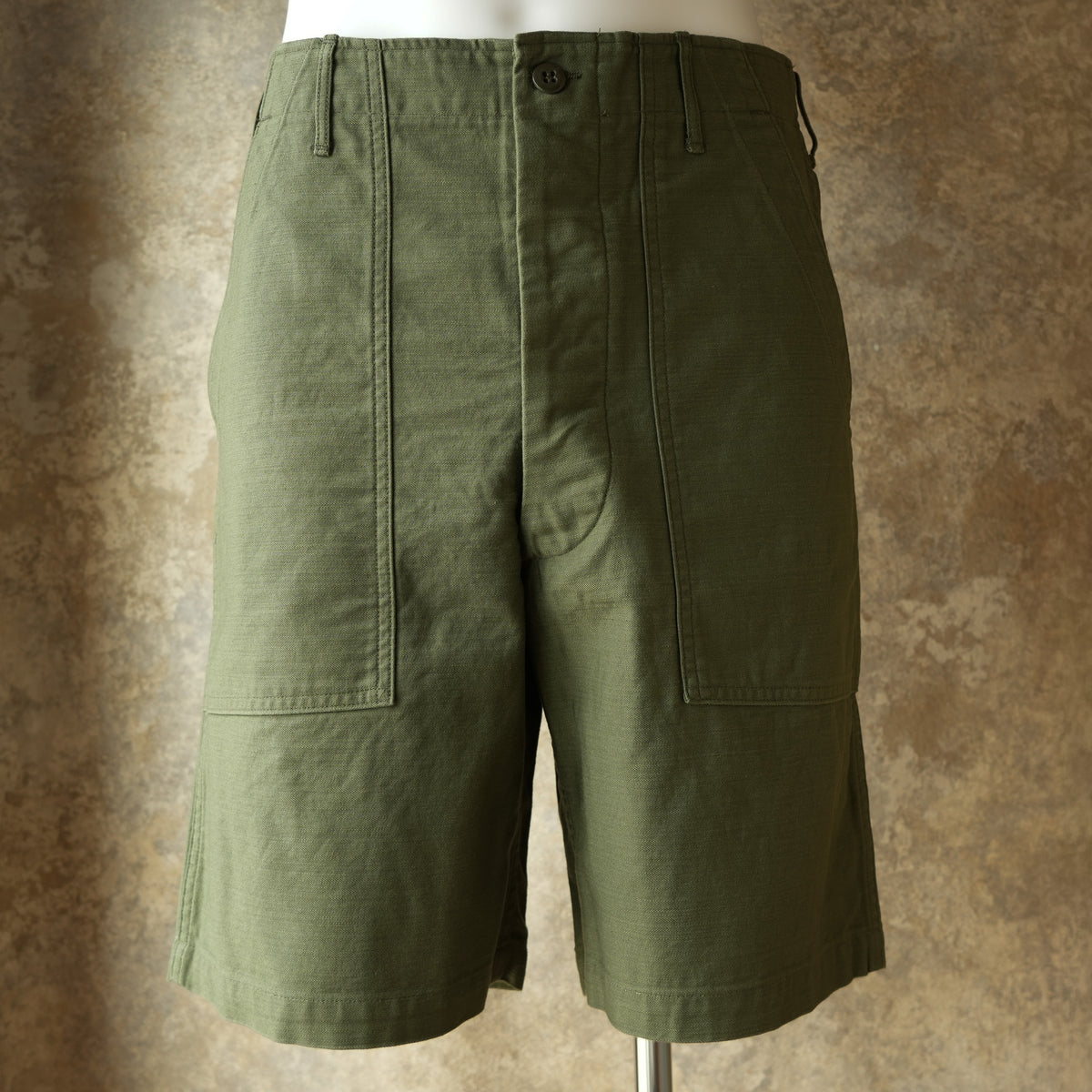
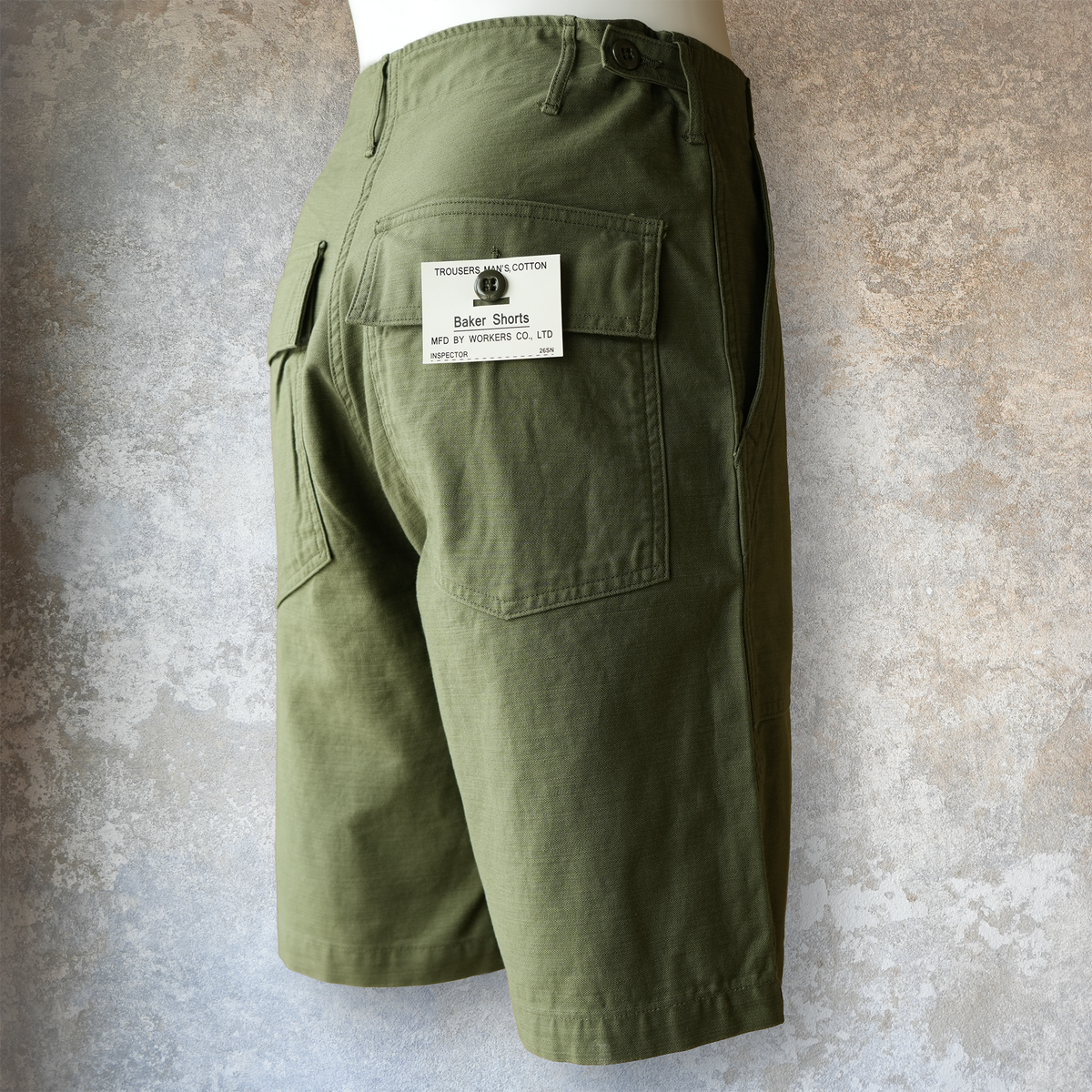
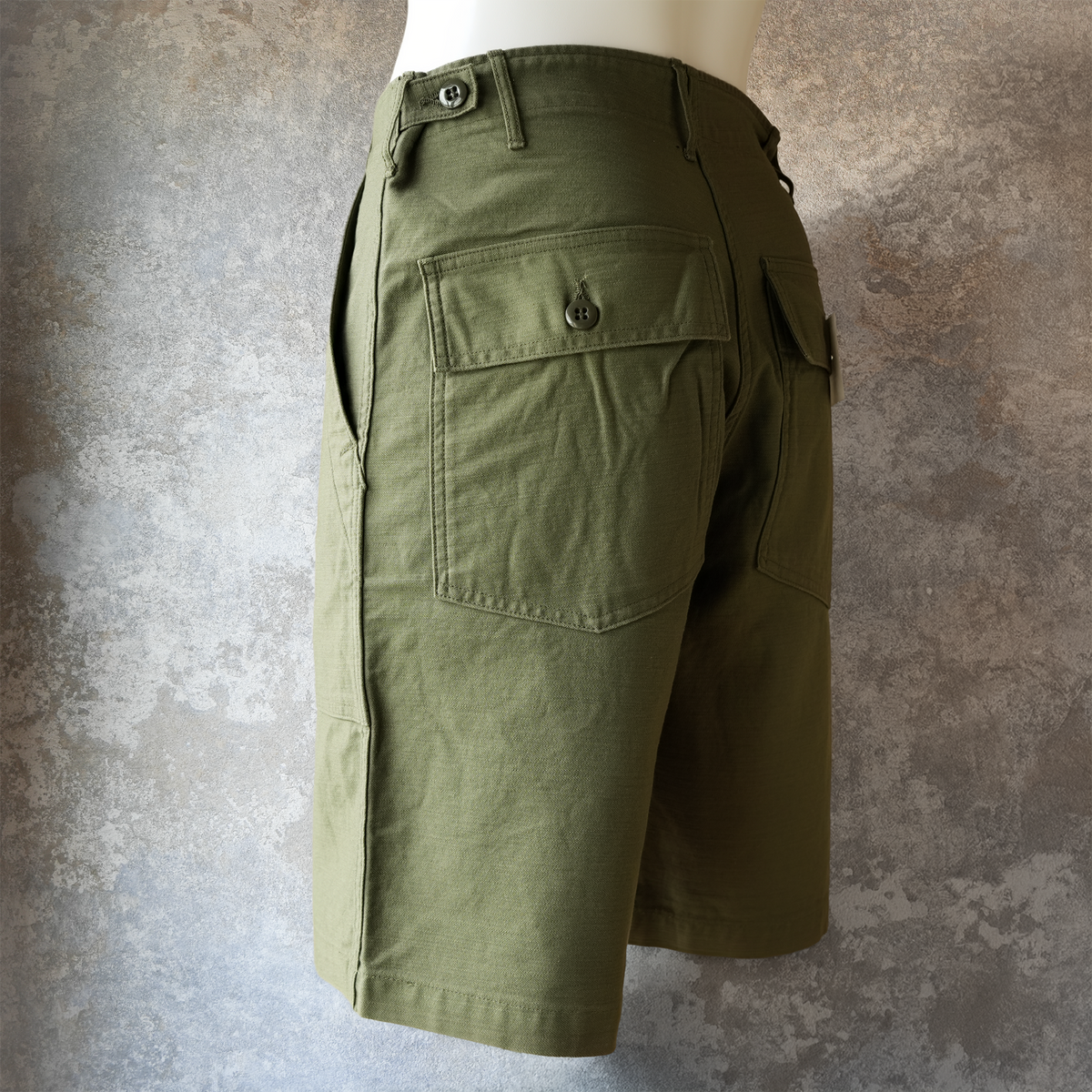
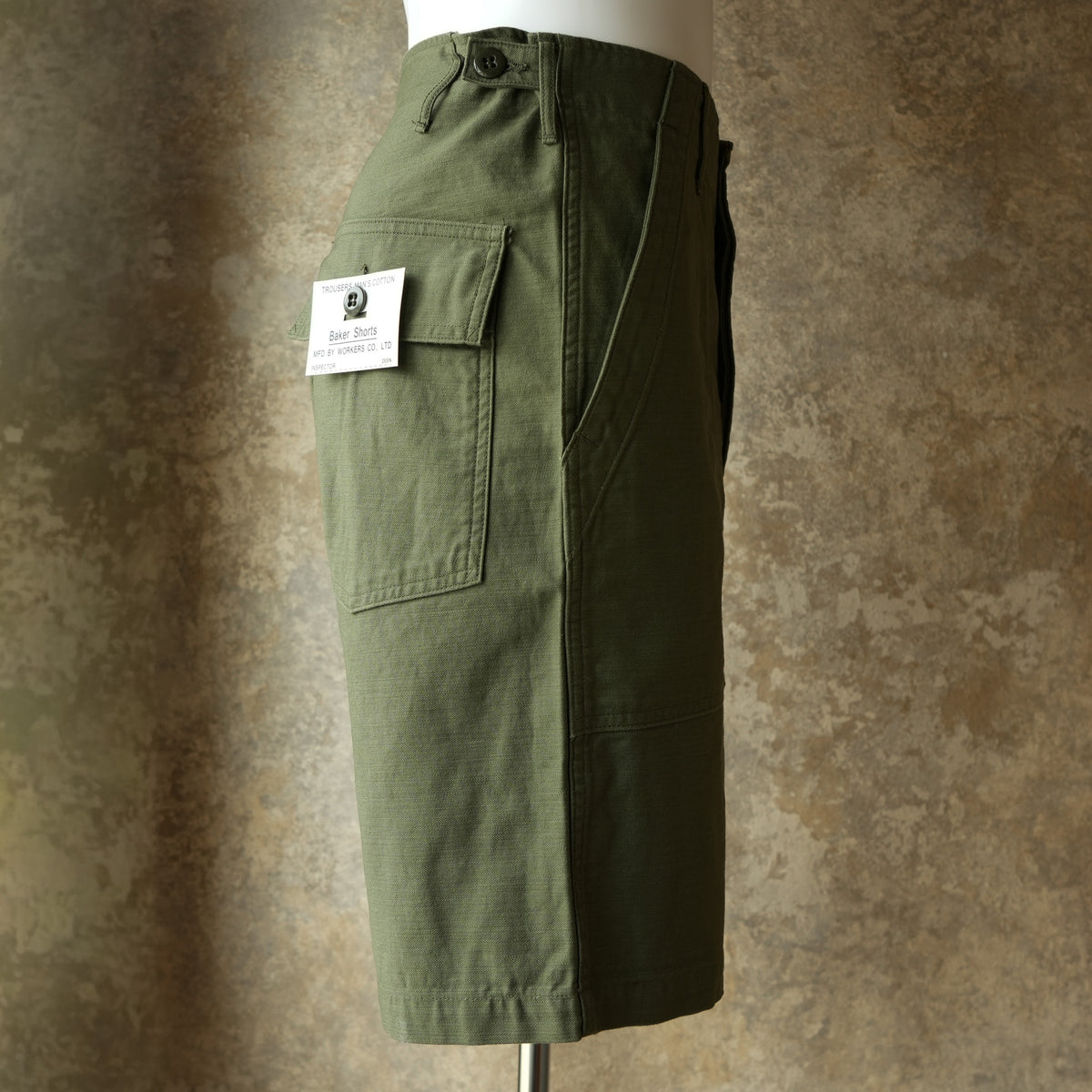
Product name: Baker Shorts, 10296 Reversed Sateen
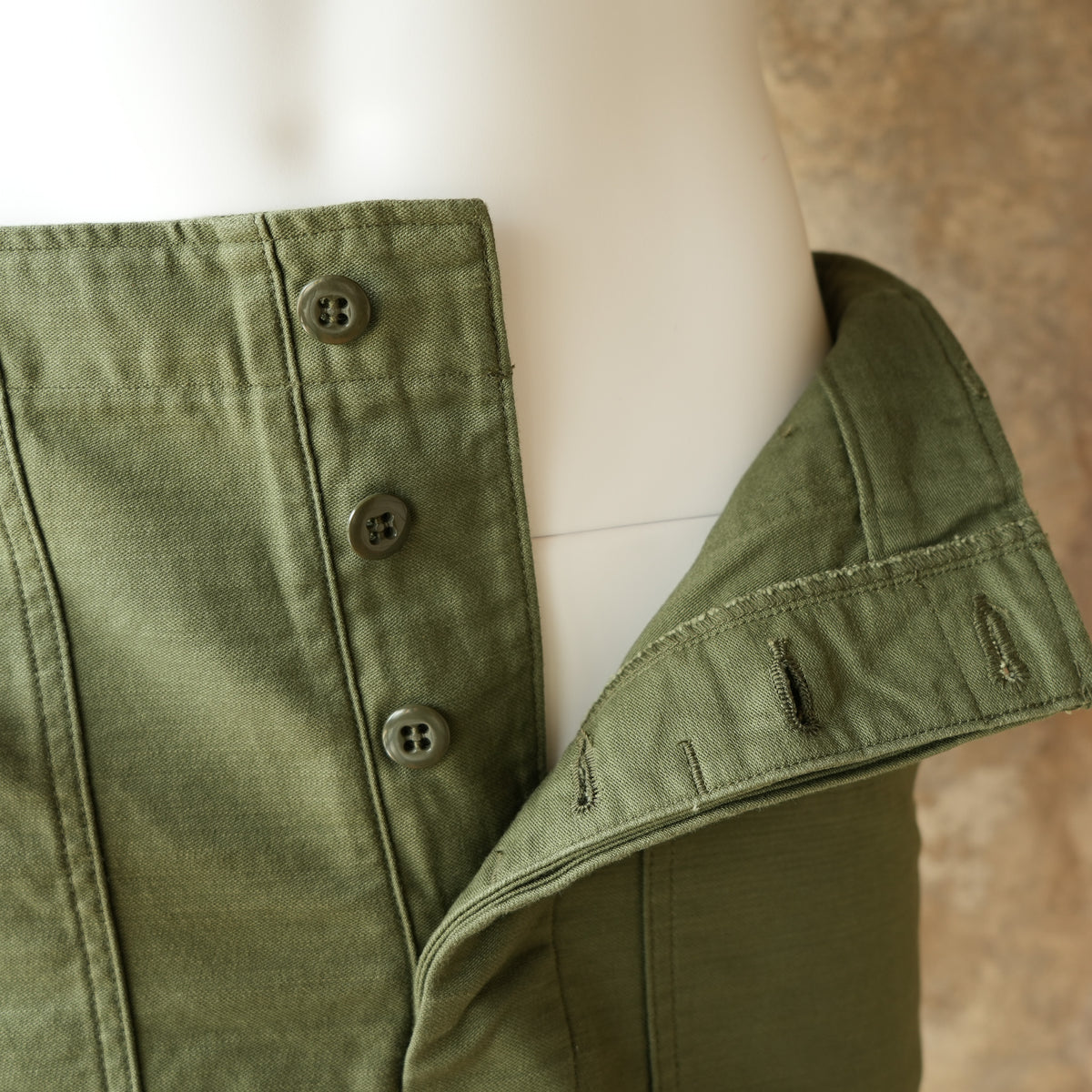
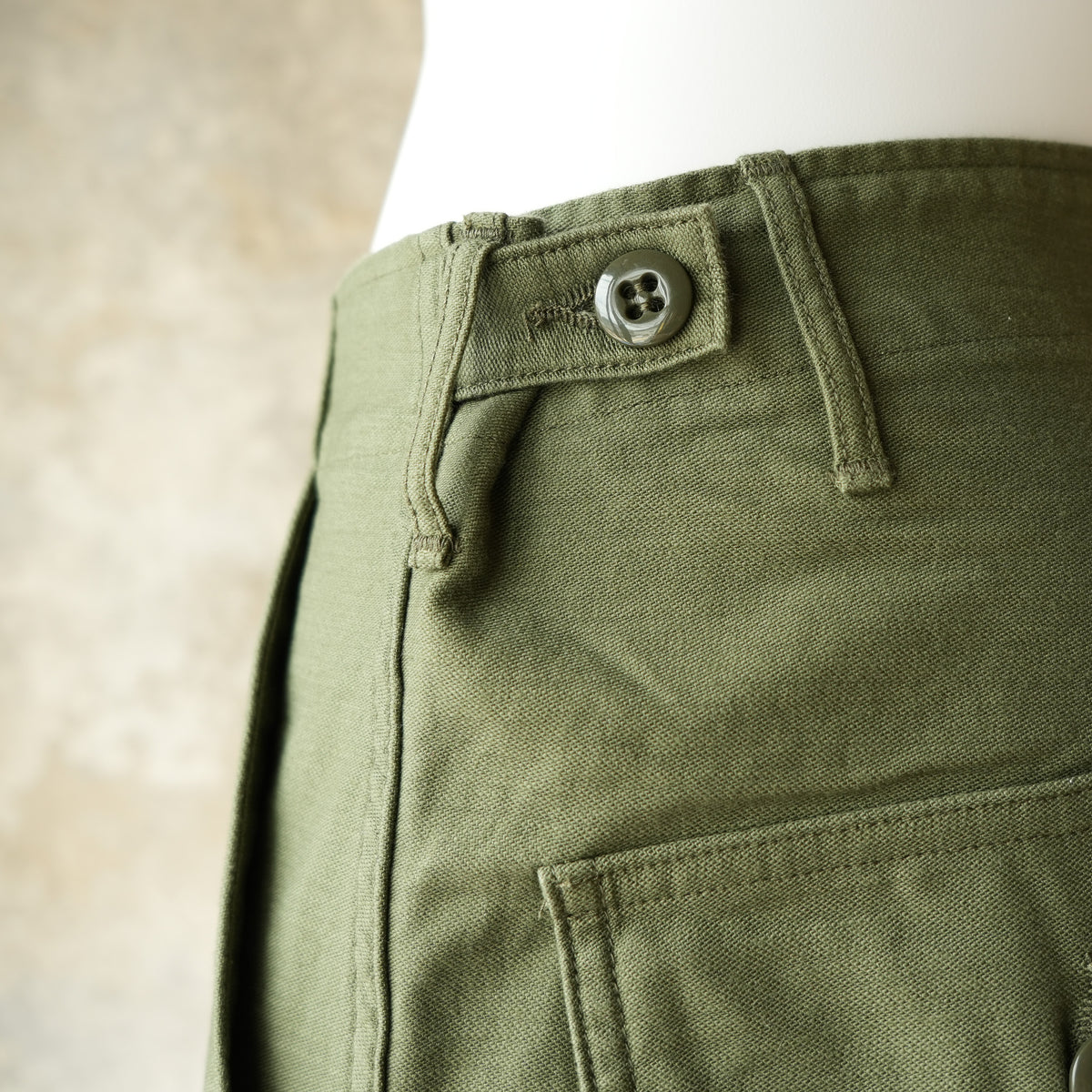
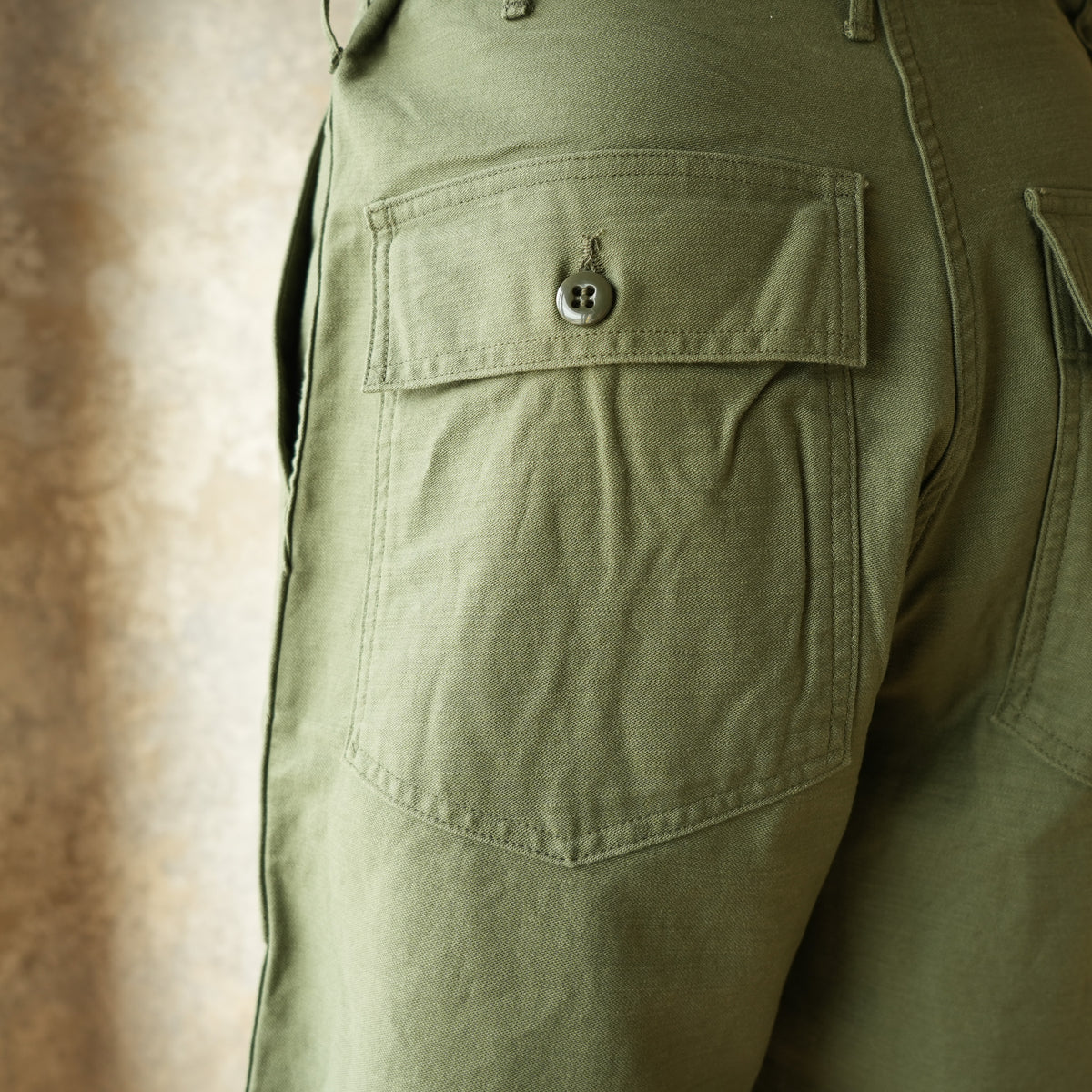
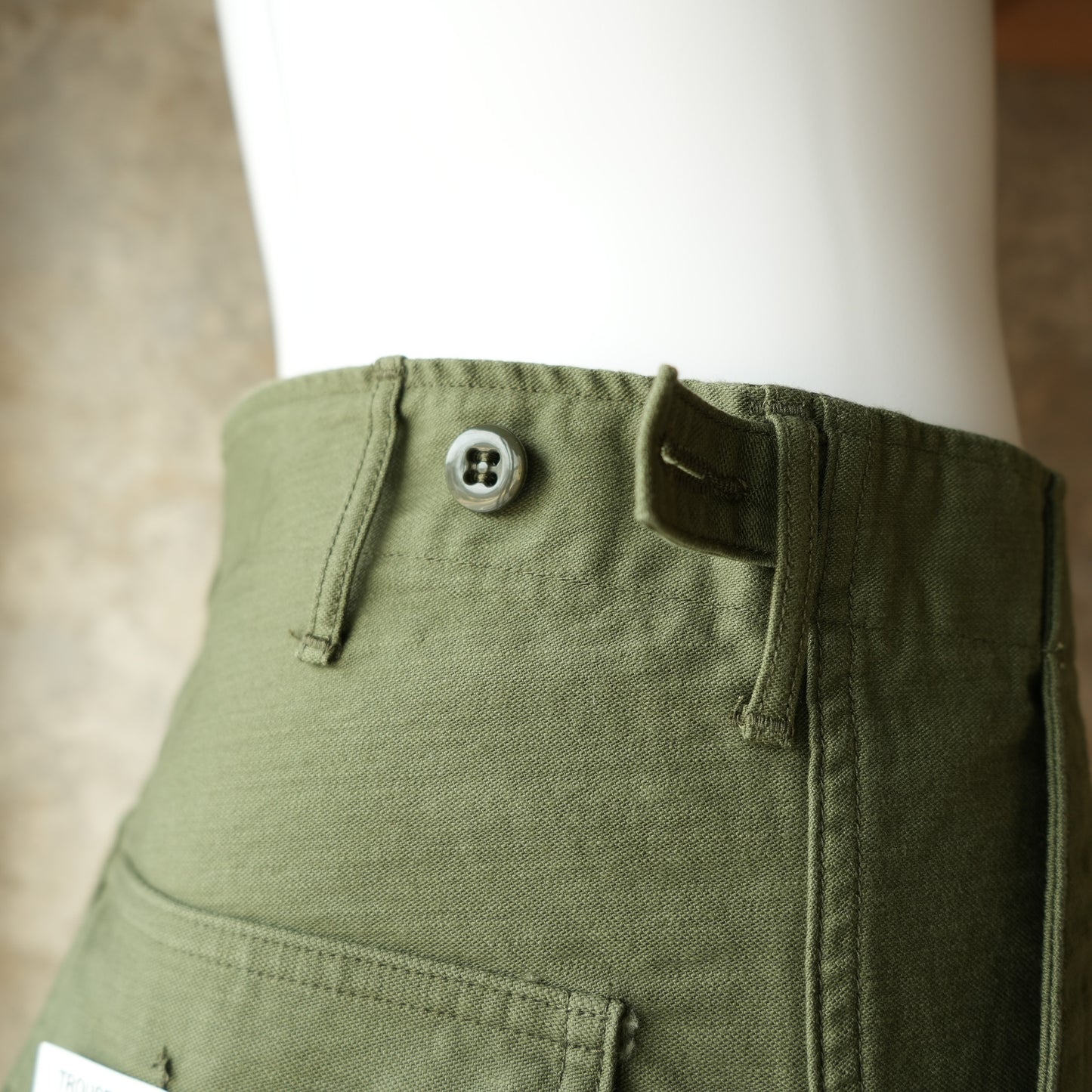
Material: 10 oz. 100% Cotton, Sulfur-dyed Back Sateen
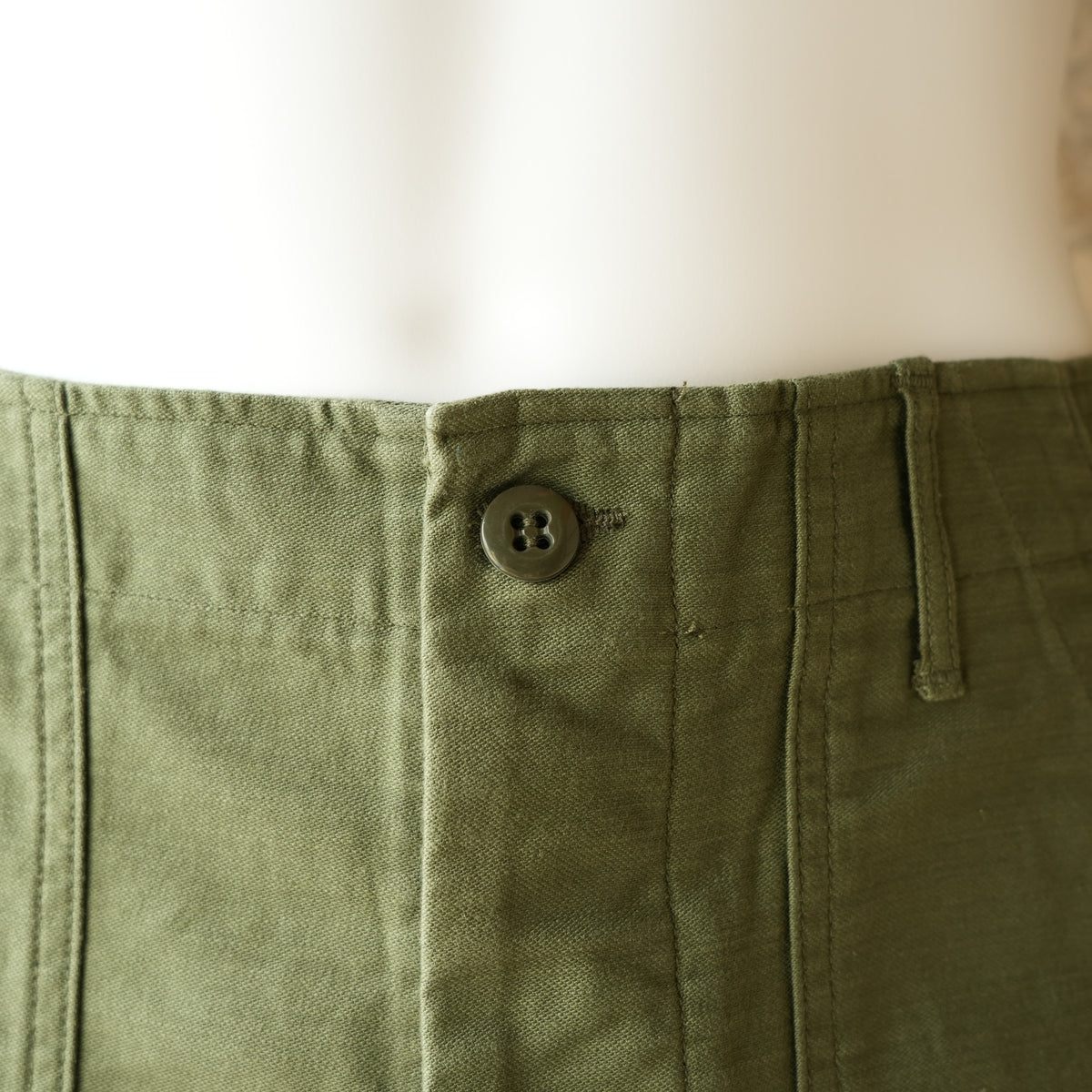
Attachments: Urea buttons
Stitching: Polyester spun thread
Country of origin: Japan MADE IN JAPAN
Price: ¥16,000 (main price) ¥17,600 (tax included)
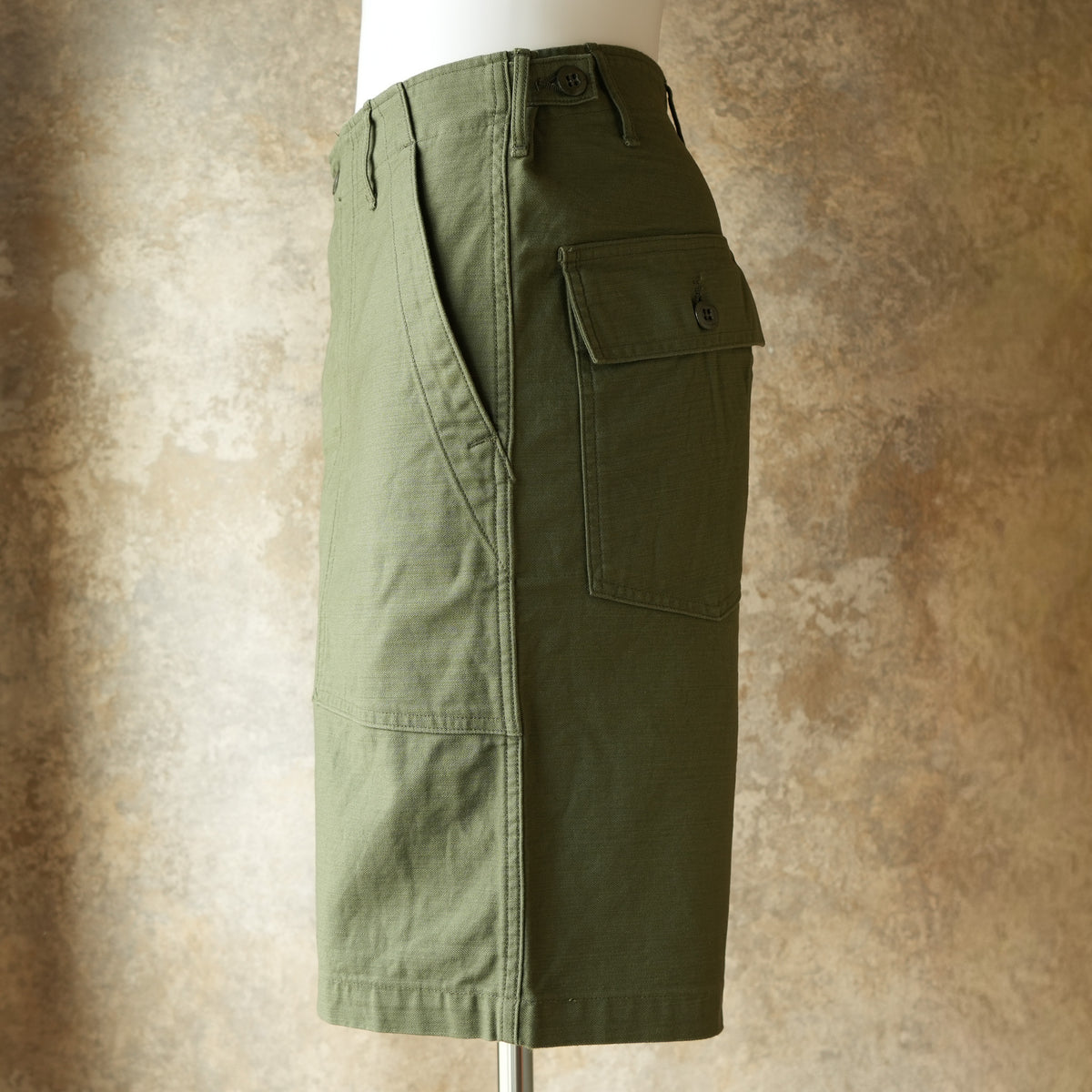
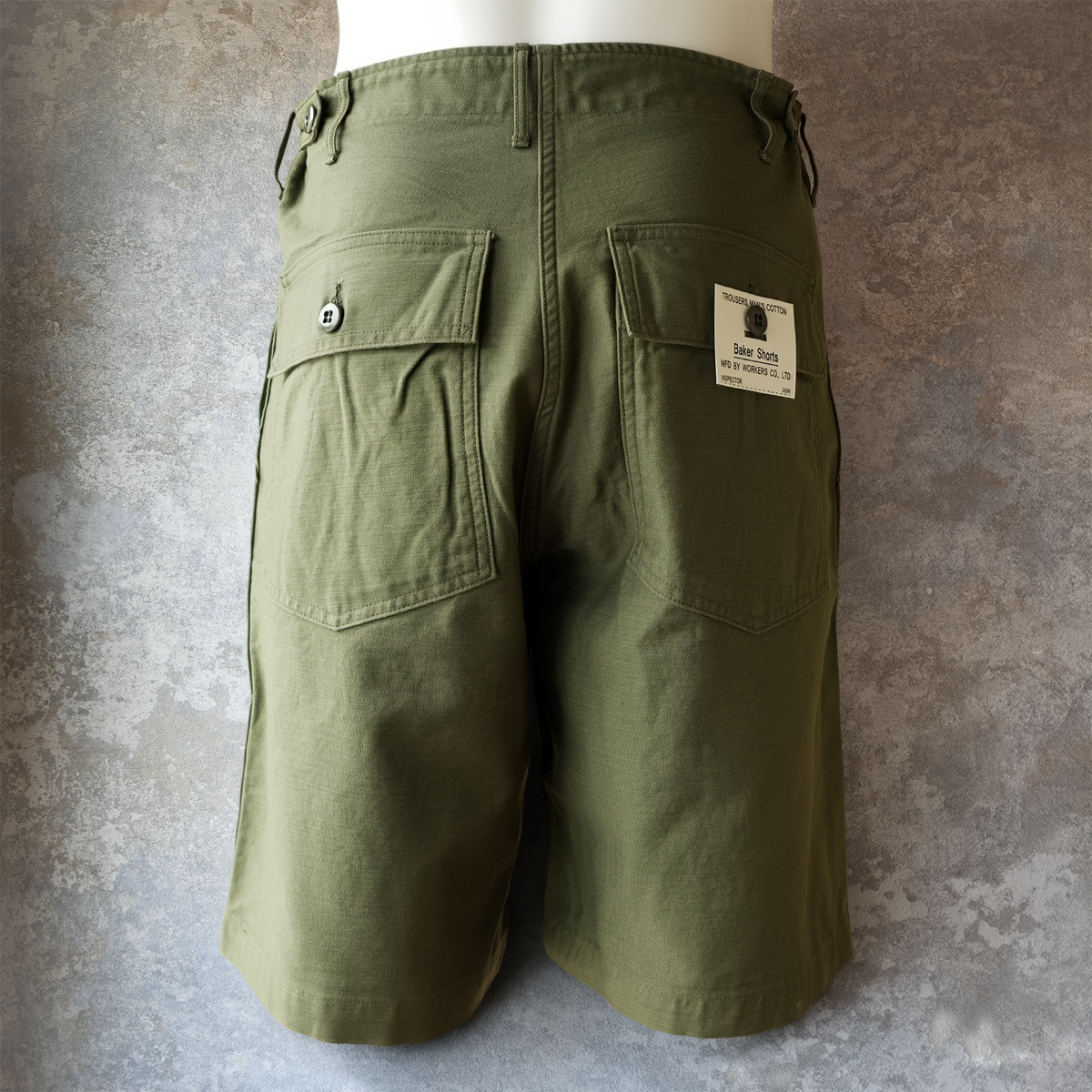
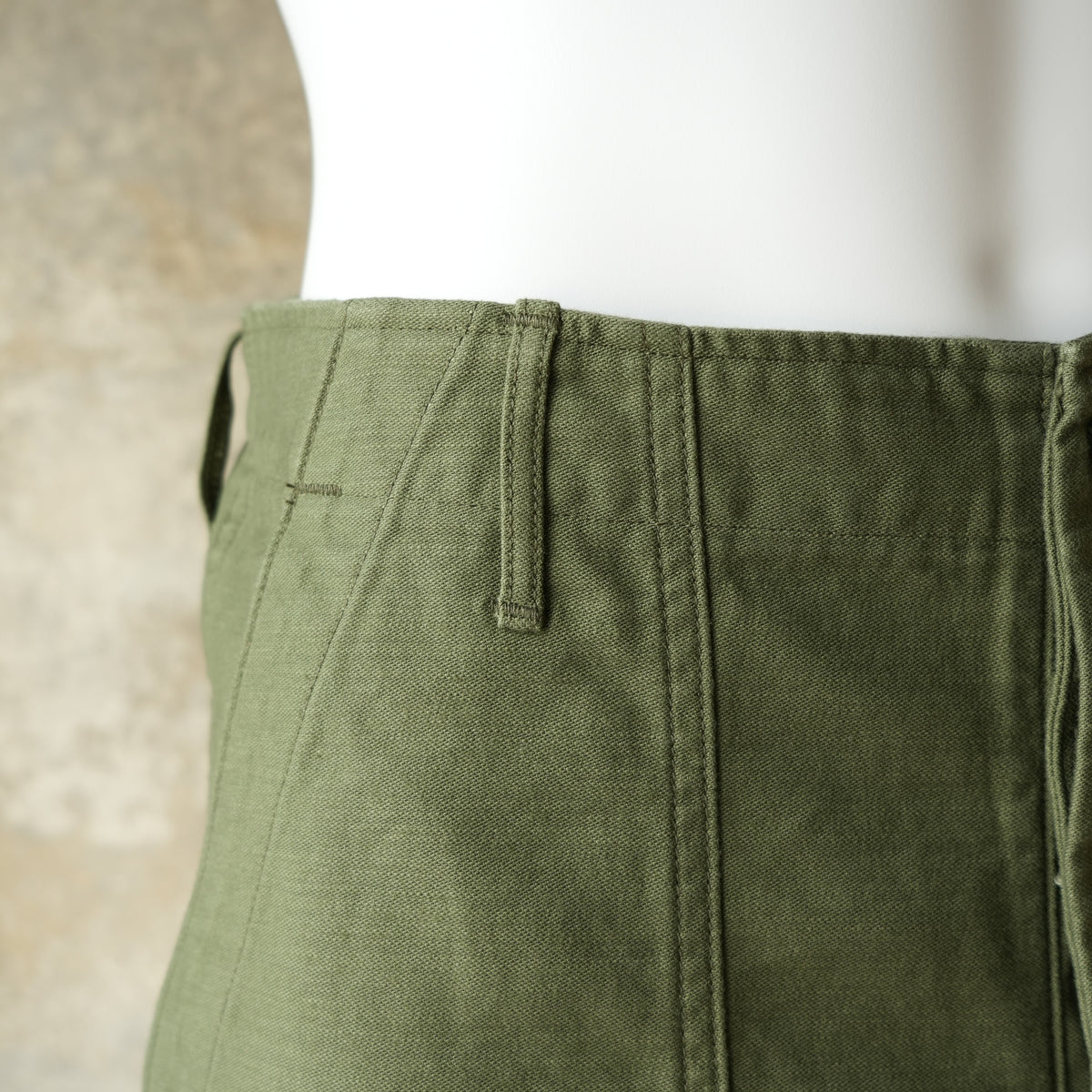
Baker shorts after a long time. The waist is exactly the same as the long version.
I rarely wear shorts anymore, but I see them a lot in the summer. I thought, "If only there were shorts made to the same specifications as the long pants...", so I made them.
Below, I will also include an explanation of the long pants version.
Official name: "TROUSERS, MEN'S, COTTON, SATEEN", commonly known as "Baker Pants".
The pattern was traced after dismantling the original MIL-T-838D (1958). Hem width 24 cm. A relaxed silhouette with wide thighs and a deep rise.
In summer, the wind blows through, and in winter, you can wear leggings inside without feeling constricted.
The fabric, back sateen, was made with reference to MIL-T-838D and MIL-C-10296J (fabric specifications) to create "coarse-grained back sateen used for Baker pants." It has a supple feel.
Initially sulfur-dyed, now vat-dyed. The original sulfur dye was discontinued. Although the type of sulfur dye was changed, the integrated factory that could perform the "mercerized" (process of flattening the surface with alkali) to sulfur dyeing process disappeared.
Doing "mercerized" to "dyeing" at different factories is not realistic for cost and quality stability.
Therefore, we switched to "vat dyeing". With vat dyeing, there are integrated factories for mercerization to dyeing. The characteristic of vat dyeing is that there is less color fading compared to sulfur dyeing. However, "whitening" occurs in rubbed areas. As you can see from the back flat-felled seam, it's a dramatic and conspicuous change.
With sulfur dyeing, the entire fabric becomes whitish, and eventually, the entire fabric becomes almost the same color, but with vat dyeing, there is a dramatic difference between rubbed and unrubbed areas.
While back sateen is about 10 oz, poplin is about 6.2 oz. I wore jungle fatigues in the summer while cutting grass and thought, "If I made Baker pants with poplin of this thickness, they would be perfect for mid-summer?" So I made them. However, the fabric thickness is different from back sateen, and they cannot be sewn well with the same sewing method. We made fine adjustments, such as changing the waistband from chain stitching to single stitching.
The products are already OW (one-washed).
End of excerpt from WORKERS
Since the labor costs were too high, I declared that I would no longer make shorts! I don't think much time has passed since then, but the Baker pants shorts are back.
Moreover, the recent summers have been so hot that cool shorts must have been deemed an essential item.
This season, two types are being released: 10oz back sateen and an even thinner 6.2oz poplin. This page is for the 10oz back sateen fabric version.
They are about knee-length, so if they are too long, you might want to fold them up a bit.
The product has been washed. Actual size chart: unit cm
| Size | XS | S | M | L | XL |
| Waist | 80.5 | 84.5 | - | 95.5 | 102.0 |
| Front Rise | 34.0 | 33.5 | - | 35.5 | 35.5 |
| Back Rise | 44.0 | 44.8 | - | 44.5 | 45.5 |
| Thigh | 33.0 | 34.0 | - | 37.0 | 38.0 |
| Inseam | 23.0 | 22.5 | - | 23.5 | 23.5 |
| Hem Width | 29.0 | 30.0 | - | 32.0 | 32.8 |
Trying on at the store
Trying on at the store
In-store try-ons are offered as a service to customers who are considering purchasing from our store.
Please refrain from trying on items solely for the purpose of size confirmation.
Items such as cut-and-sew garments, which are prone to stretching, cannot be tried on. Exchanges after trying on at home post-purchase are also not accepted.
Please also refrain from trying on belts, as they tend to stretch. For length confirmation, please bring a belt you are currently using.
For leather boots and sandals, try-ons are also offered on the premise of purchase. Please try them on during the final confirmation stage. When trying on, please be careful not to cause wrinkles. Please be sure to bring your own socks.
We appreciate your understanding and cooperation to ensure everyone can enjoy using our services comfortably.
No Forwarding Services
No Forwarding Services
We do not ship to freight forwarding addresses.
Please note that if the shipping address provided is identified as a freight forwarder after an order has been placed, your order will be cancelled.
Customs Duties & Taxes
Customs Duties & Taxes
Please note that international orders may be subject to customs duties, taxes, and import fees upon arrival in your country. These charges are the responsibility of the recipient and are not included in the item price or shipping cost.
We recommend checking with your local customs office for more information about applicable fees before placing your order.
International Shipping
International Shipping
Please note that the international shipping cost shown at checkout is an estimate. After your order is placed, we will calculate the exact shipping cost based on the destination, package size, and weight.
- If the actual shipping cost is lower than the estimated amount, we will adjust the shipping charge to the correct amount and finalize your payment accordingly.
- If the actual shipping cost is the same as the estimated amount, your order will be processed without any changes.
- If the actual shipping cost is higher than the estimated amount, we will contact you before processing your order.
- Please note that some destinations may be subject to a Remote Area Surcharge imposed by the shipping carrier. If applicable, only the actual surcharge charged by the carrier will be billed separately.
Please note that the international shipping cost shown at checkout is an estimate. After your order is placed, we will calculate the exact shipping cost based on the destination, package size, and weight.
- If the actual shipping cost is lower than the estimated amount, we will adjust the shipping charge to the correct amount and finalize your payment accordingly.
- If the actual shipping cost is the same as the estimated amount, your order will be processed without any changes.
- If the actual shipping cost is higher than the estimated amount, we will contact you before processing your order.
- Please note that some destinations may be subject to a Remote Area Surcharge imposed by the shipping carrier. If applicable, only the actual surcharge charged by the carrier will be billed separately.
Customs Declaration
Customs Declaration
We are unable to declare a lower value on customs invoices or shipping documents, regardless of customer request.
Accurate customs declarations are required by law. Declaring a false value may violate the import laws and regulations of the destination country. We appreciate your understanding and cooperation.
当店では、お客様のご要望であっても、インボイス(税関申告書)や発送書類に記載する商品価格を実際の購入金額より低く設定することはお断りしております。
正確な税関申告は法律上の義務であり、虚偽の申告は輸入国の法律や規制に違反する可能性があります。何卒ご理解くださいますようお願いいたします。
Share