TCB Jeans
TCB Jeans_Sing Sing Cabaret Jacket
TCB Jeans_Sing Sing Cabaret Jacket
Verfügbarkeit für Abholungen konnte nicht geladen werden
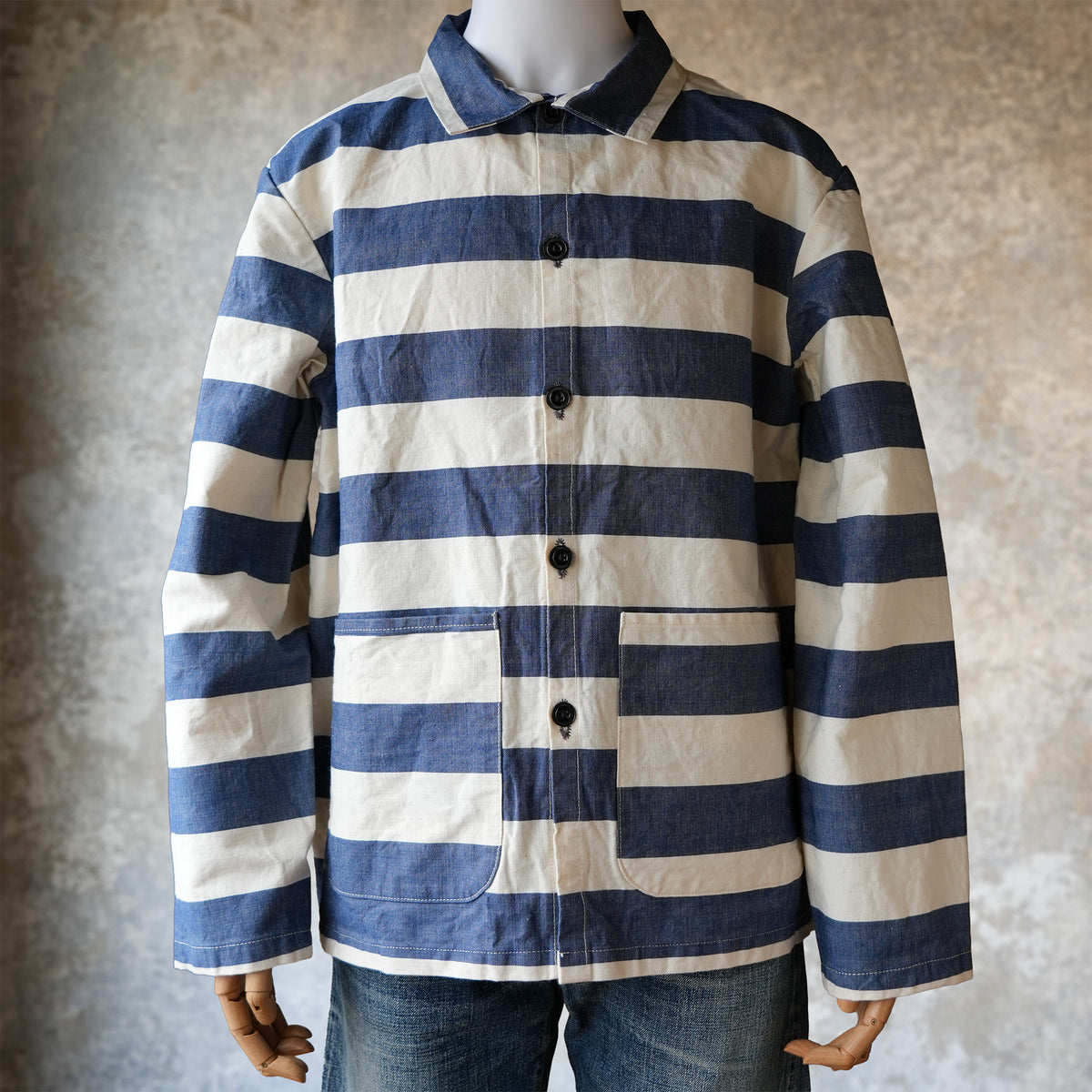
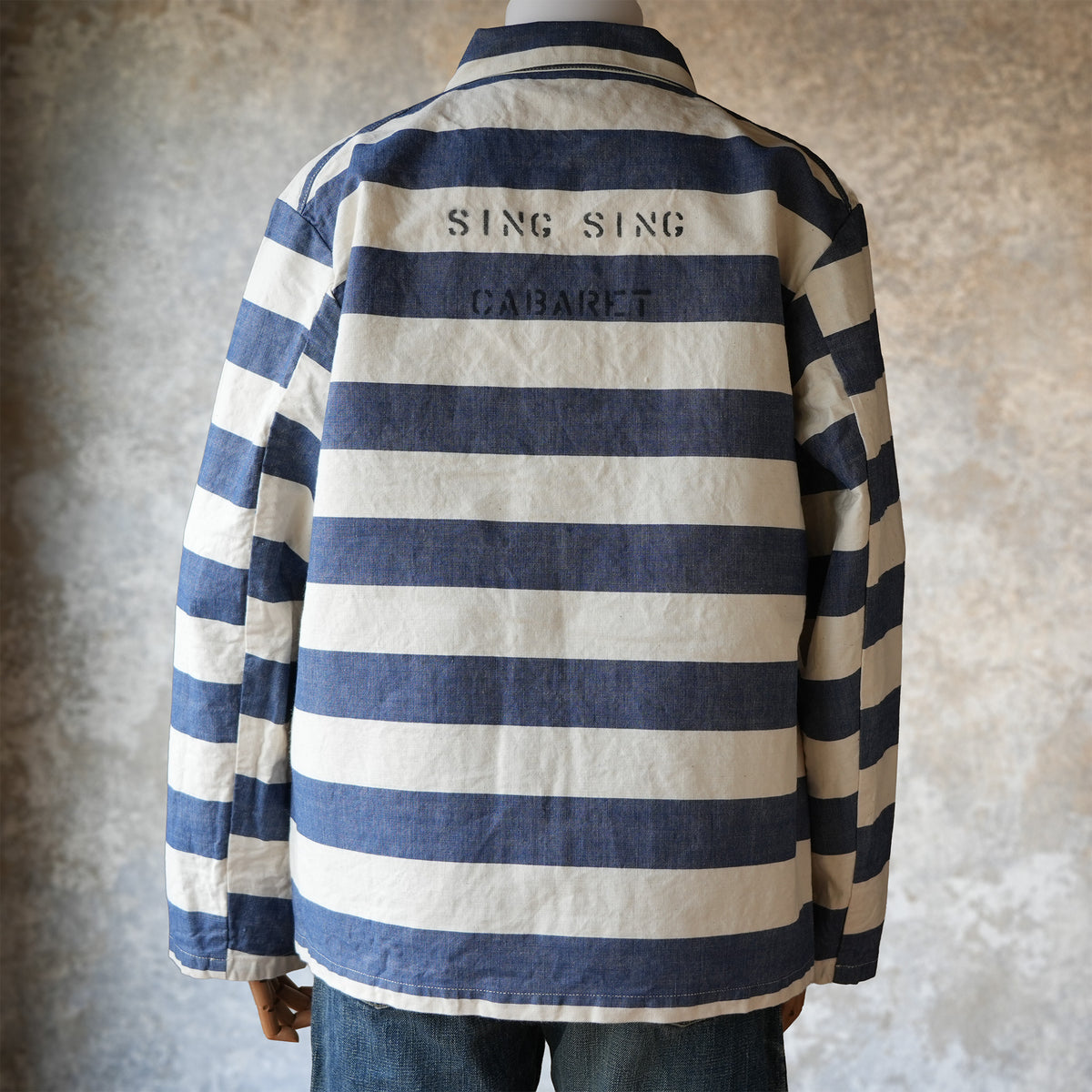
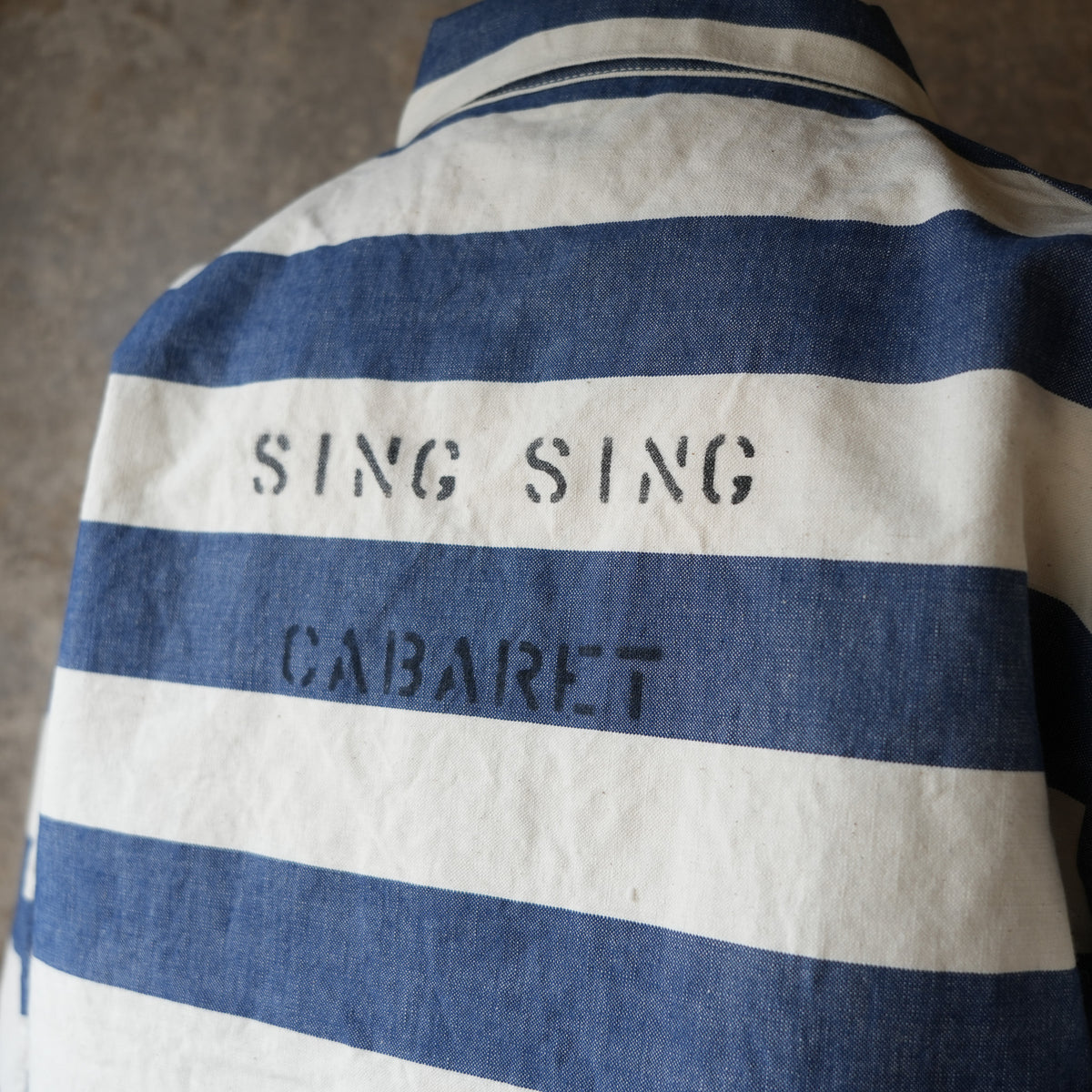
Was TCB diesmal in die Hände bekam, war eine Sträflingsuniform aus den geschätzten 40er Jahren. Als wir das große Stencil auf dem Rücken sahen, sprang uns sofort der Schriftzug "SING SING" ins Auge, zusammen mit der Häftlingsnummer.
Zuerst dachte ich, es bedeute "singen", aber eine Recherche ergab, dass es sich um das tatsächlich existierende **Sing Sing Prison** im Bundesstaat New York handelt. Ich hatte das Gefühl, den Namen schon einmal gehört zu haben, und es war am Anfang von "Frühstück bei Tiffany" mit Audrey Hepburn in der Hauptrolle.
"Ich habe mich immer gefragt, was für ein komischer Name für ein Gefängnis. Sing Sing. Wie ein Opernhaus." Im Englischen heißt es "opera house", aber in den japanischen Untertiteln wird es mit "Sing Sing ist wie ein Kabarett" übersetzt. Diese Übersetzung mit "wie ein Kabarett" hat einen merkwürdigen Eindruck hinterlassen.
Als ich mit RYO darüber sprach, meinte er: "Sollen wir es dann 'SING SING CABARET' nennen? Nach dem Krieg wurden amerikanische Nähmaschinen nach Japan importiert, und die Produktion von Jeans im eigenen Land begann. Zu dieser Zeit wurde dieser Film ins Japanische übersetzt, und vor dem Hintergrund der damaligen Zeit, die den Japanern nicht vertraut war, wurde es vielleicht als 'Kabarett' übersetzt. Bei TCB, wo wir die traditionelle Handwerkskunst verfolgen, und gerade weil wir eine japanische Marke sind, haben wir uns für dieses Stencil mit 'SING SING CABARET' und diese Jacke entschieden. Mir wurde klar, dass ich von diesen Worten fasziniert war."
Kabarett = Ort des Ausdrucks. Andererseits Sträflingskleidung = Symbol für Einschränkung und Regeln. Diese Kombination gegensätzlicher Bilder fand ich typisch für TCB.
Als ich die Vintage-Sträflingskleidung, die ich tatsächlich in die Hände bekam, genauer betrachtete, war sie wirklich interessant. In der Welt der Arbeitskleidung geht es immer um "Effizienz für den Verkauf" und "den Kampf gegen die Kosten", aber bei dieser Sträflingskleidung handelt es sich um Kleidung, die von vornherein **nicht für den Verkauf gedacht war**.
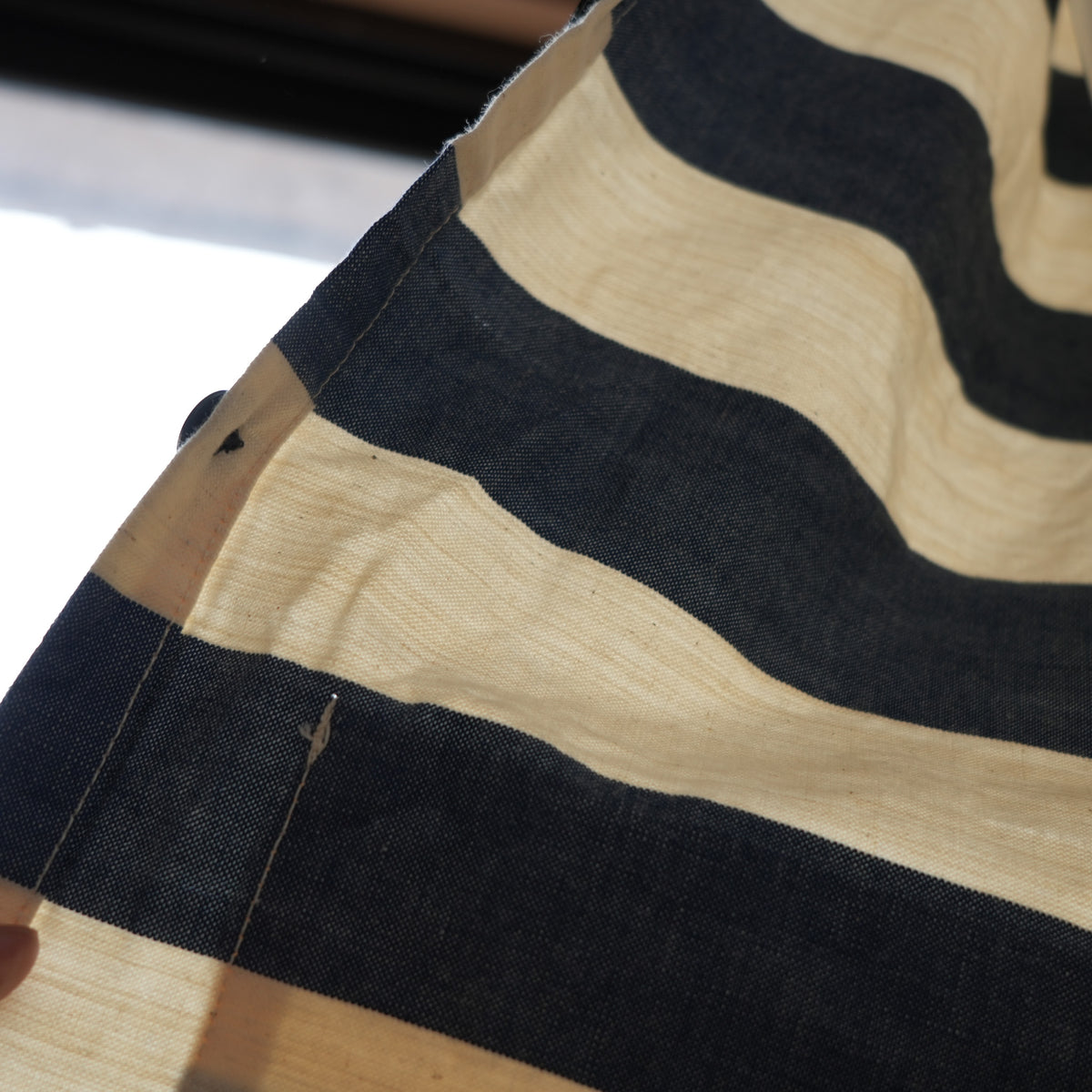
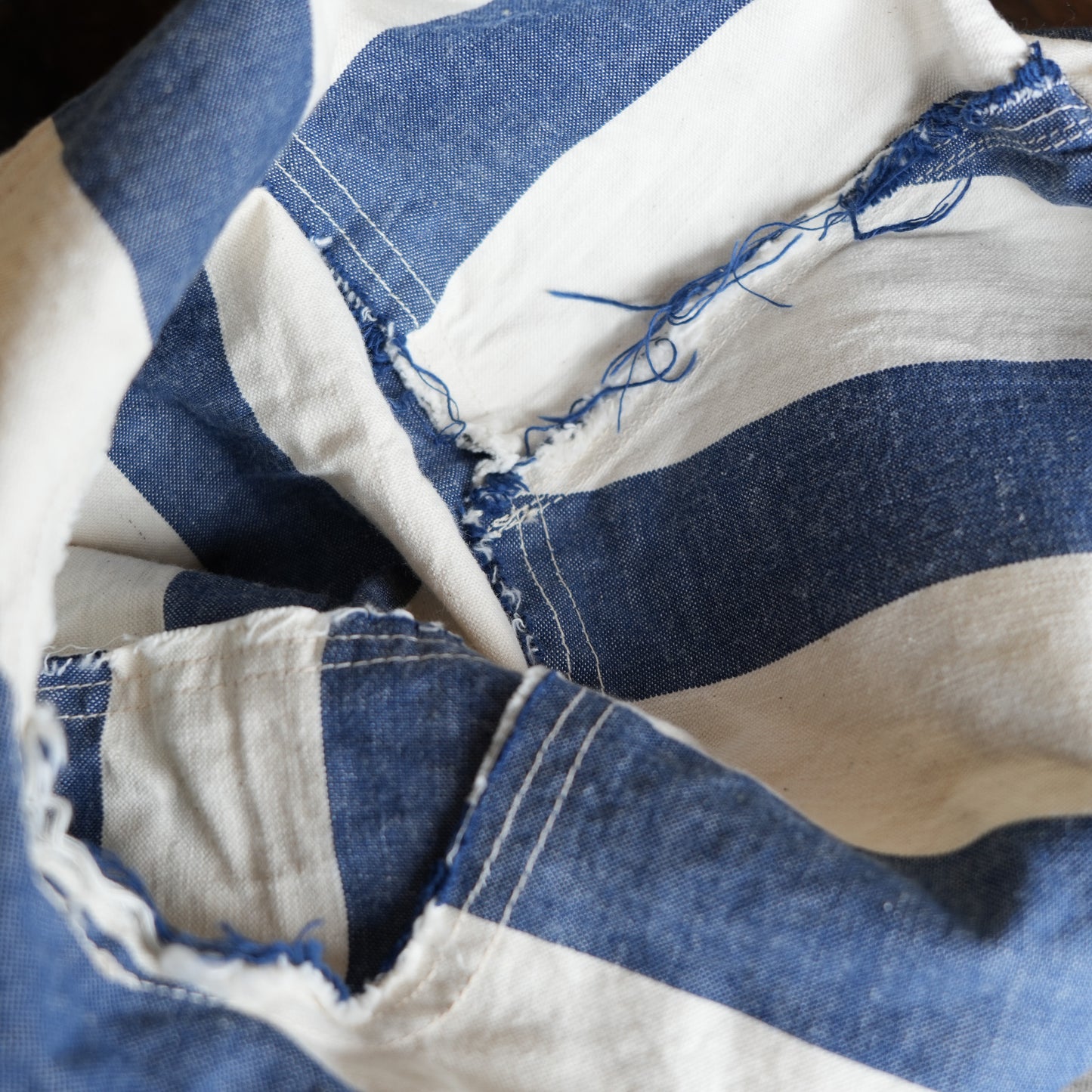
Die Nähte waren weder Kappnähte noch Overlocknähte. Es wurde einfach von hinten zusammengelegt und nur mit einer Steppnaht genäht. Wir haben lange überlegt, wie wir es bei TCB umsetzen sollen, aber auch dieses Mal haben wir uns bewusst für die gleiche Methode entschieden: nur eine Steppnaht, bei der die Nahtzugaben ausfransen. So bleibt die reale "Rauheit" erhalten, die die Atmosphäre von damals vermittelt.
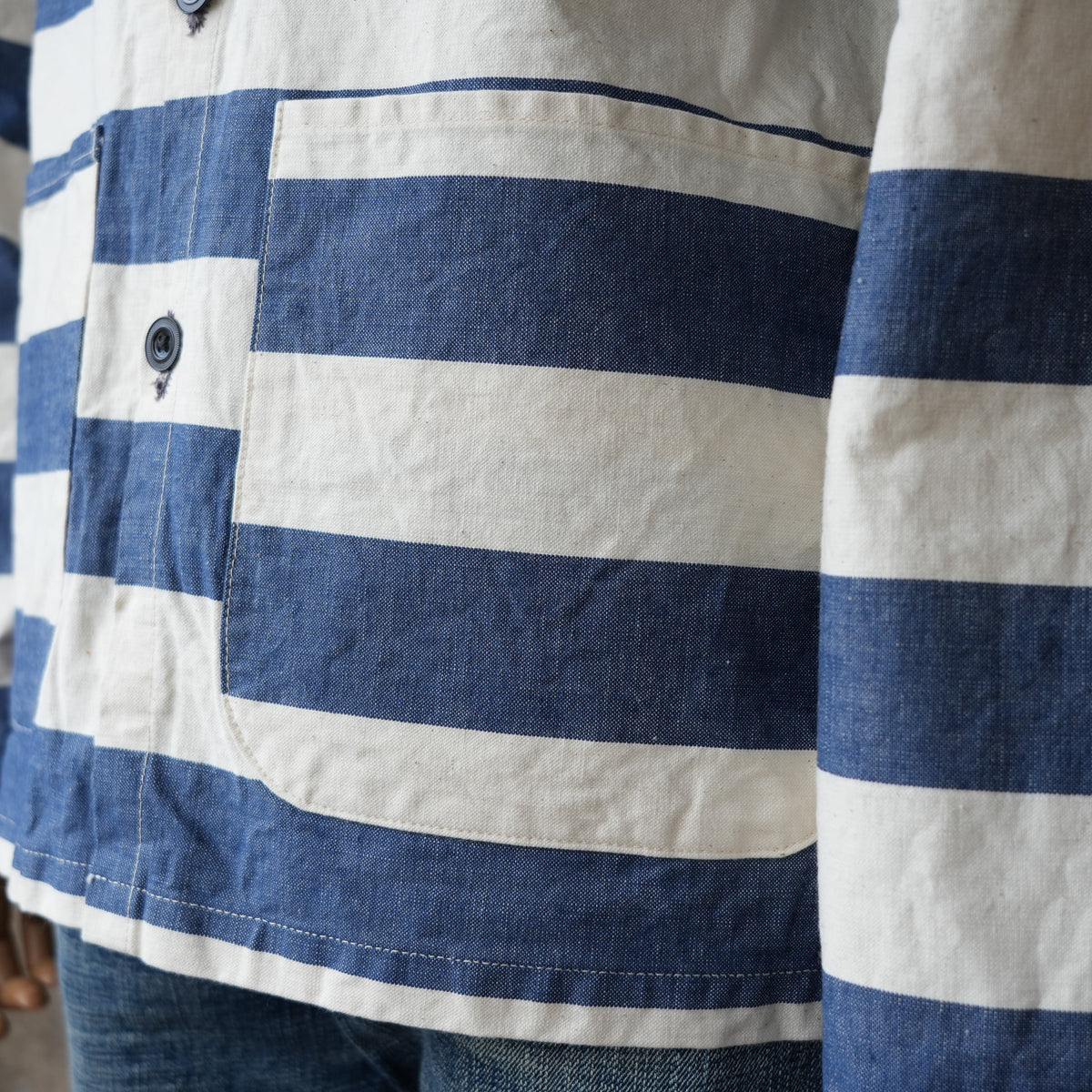
Das Gleiche gilt für das Design. Damit nichts versteckt werden kann, gibt es keinerlei Taschen. Da es außerhalb der Gefängnismauern heutzutage etwas unpraktisch wäre, haben wir bei TCB Taschen hinzugefügt.
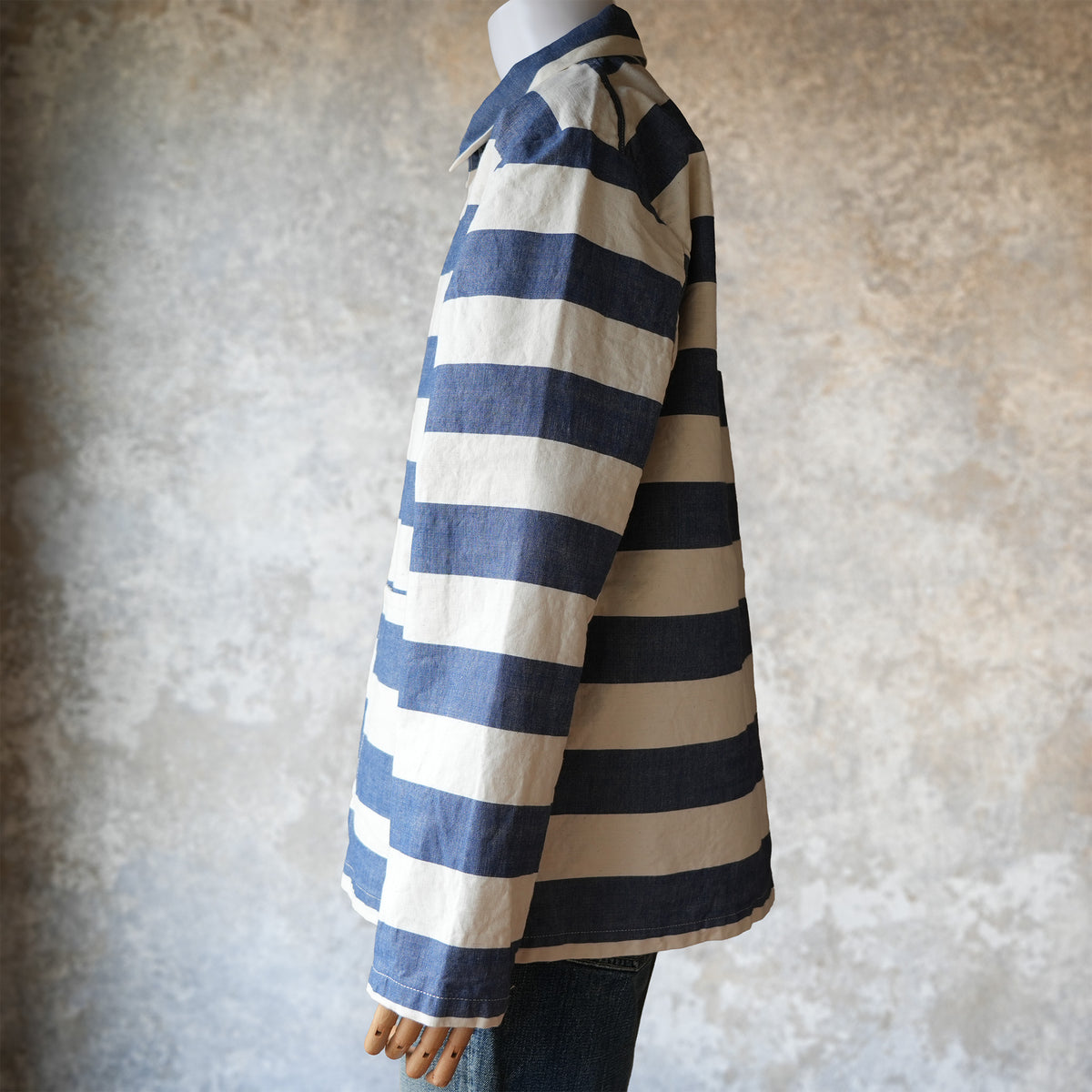
Die Ärmelbündchen sind ebenfalls sehr weit, etwa 19 cm. Ist das auch, um das Verstecken von Gegenständen zu verhindern? Auch hier haben wir überlegt, ob wir es so lassen sollen, haben aber der Silhouette und der Alltagstauglichkeit Priorität eingeräumt und die Weite so angepasst, dass man sich beim Essen nicht beschmutzt.
Und noch etwas, das mich beeindruckt hat, war das "Musterpassen". Obwohl die gesamte Verarbeitung eher grob ist, sind die Vorderseite und die Streifen merkwürdig exakt aufeinander abgestimmt. Als ich dachte: "Nur hier ist es sauber gemacht", stellte ich fest, dass die Körperteile vorne und hinten alle miteinander verbunden sind, eine Art One-Piece-Design. Es war natürlich, dass das Muster passte (lacht).
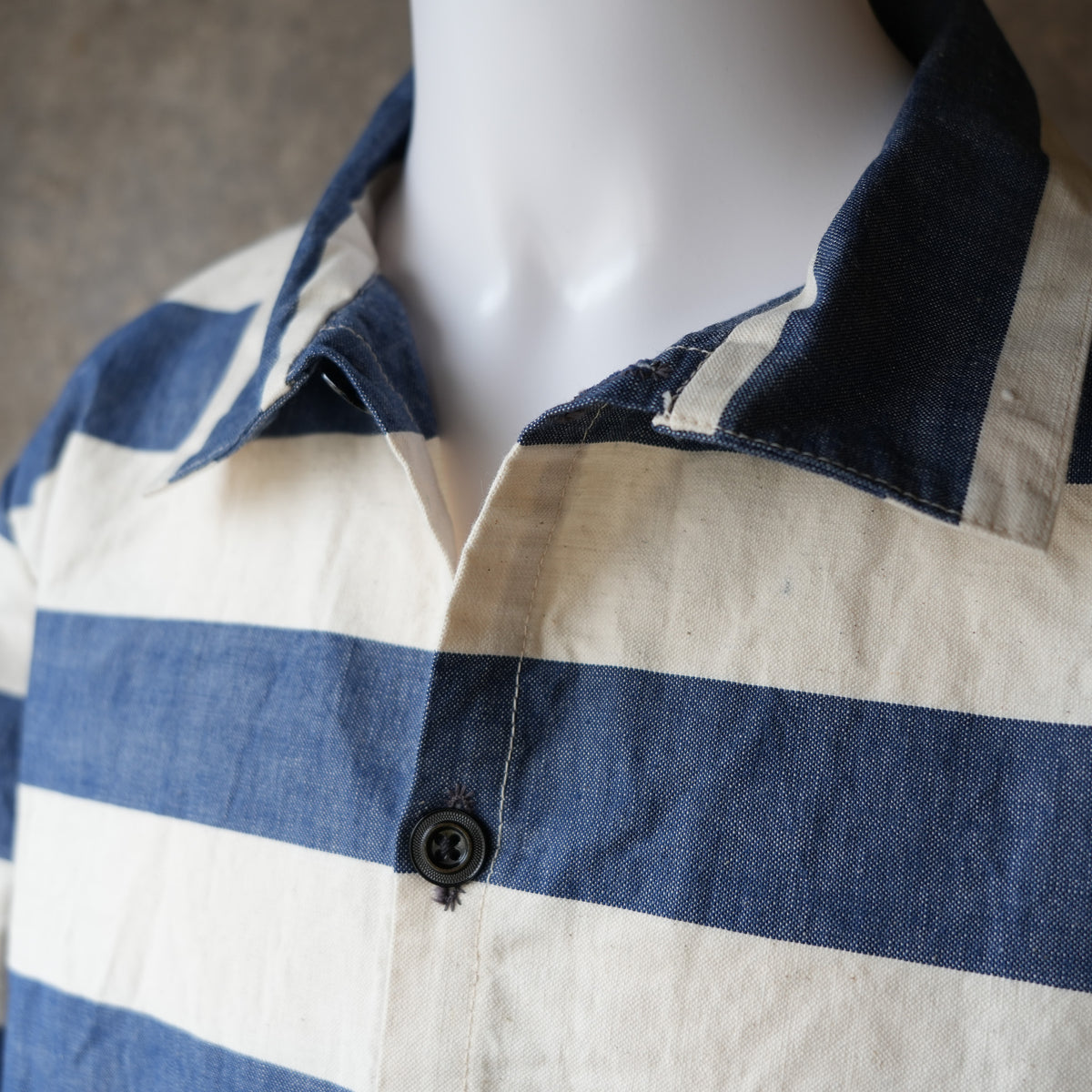
Im Ergebnis eine Jacke, die aus einer erstaunlich einfachen Konstruktion besteht: ein Vorder-/Rückenteil, zwei Ärmel, ein Kragen. Ja, Kleidung, die "nicht zum Verkaufen, sondern zum Tragen" gedacht ist.
Für TCB, das Kunden auf der ganzen Welt hat, ist dieses Projekt nicht nur eine Neuauflage. Es ist ein Versuch, universelle Themen wie Freiheit, Verantwortung und Identität durch das Thema "Sträflingskleidung" als Mode neu zu interpretieren.
Genau wie bei Denim steckt auch in Uniformen "der Beweis, dass ein Mensch gelebt hat". TCB glaubt daran. Deshalb soll auch dieses Kleidungsstück kein negatives Symbol sein, sondern eine positive Botschaft, die die "Stärke des Strebens nach Freiheit" symbolisiert, in die Welt tragen.
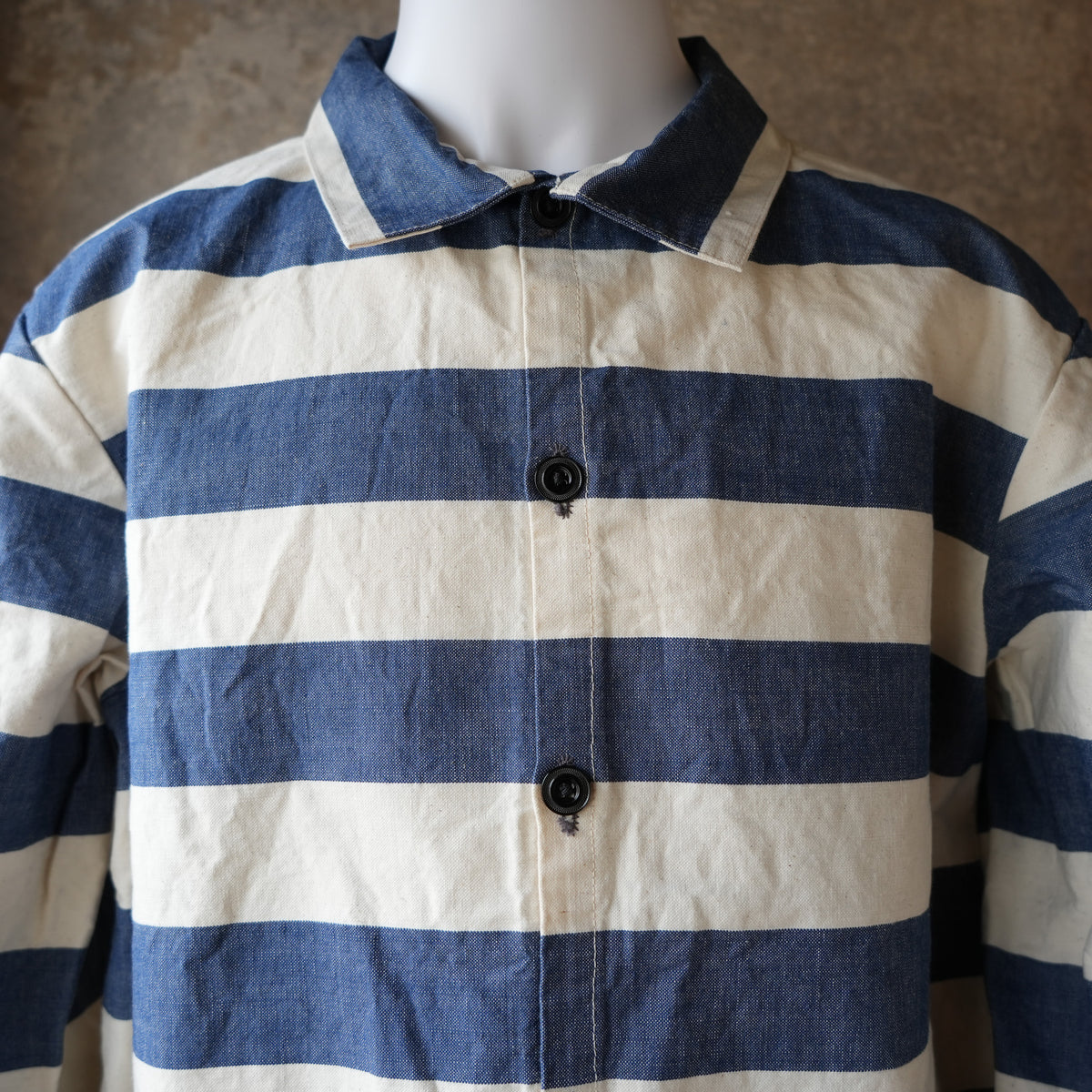
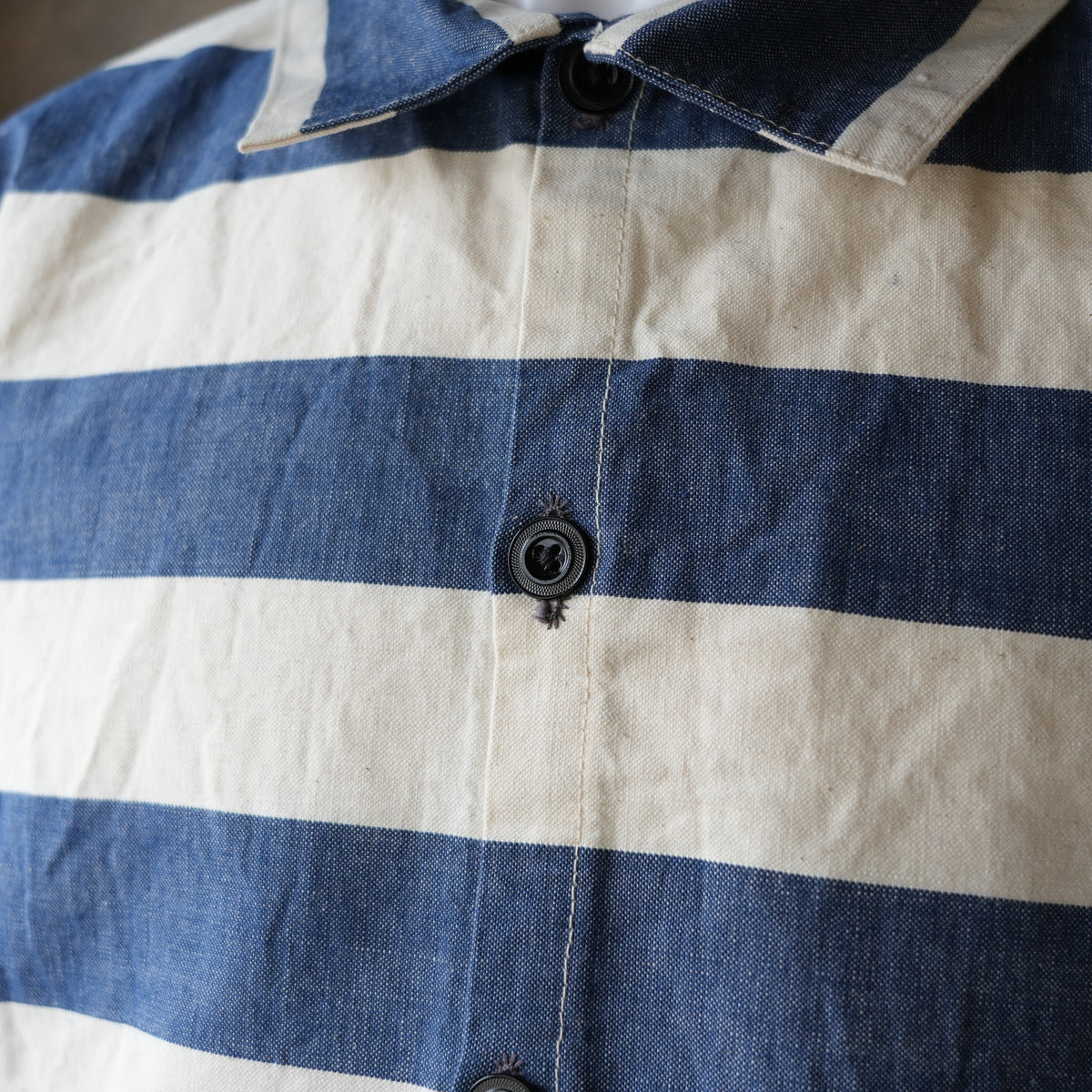
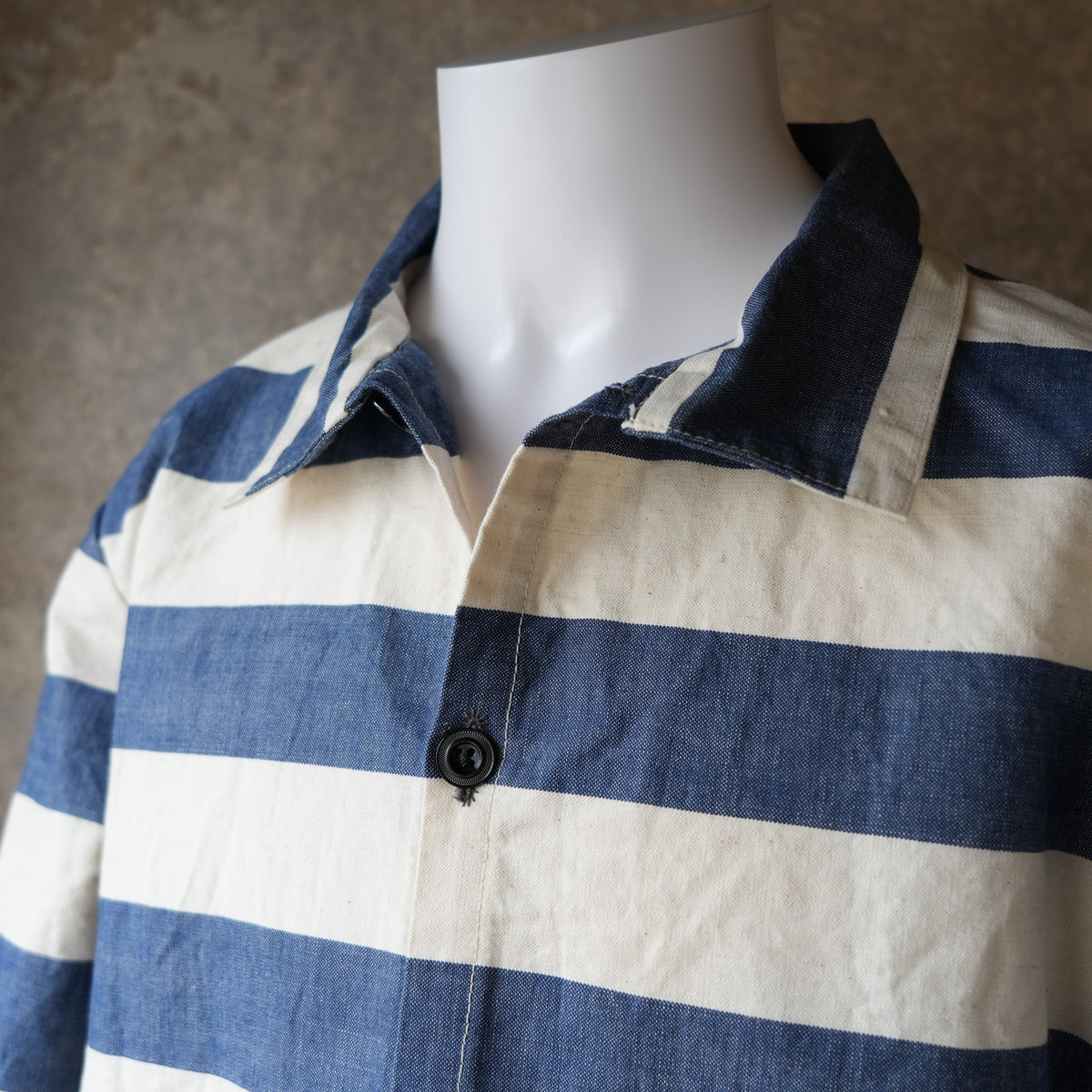
□ Stoff Der Stoff wurde speziell für die SING SING Cabaret Jacket bei einem Originalhersteller in Auftrag gegeben. Tatsächlich wird er quer verwendet. Im Rollzustand ist es ursprünglich ein vertikal gestreifter Stoff. Durch die bewusste Querverwendung wird er letztendlich zu einem gestreiften Muster.
Diese Verwendung ist unauffällig, da die Stoffstruktur **Enten-Gewebe (Leinwandbindung)** ist. Kettfaden 10er x Schussfaden 16er, ca. 10 Unzen. Er hat eine feste Bindung, aber einen weichen Griff.
Als Rohmaterial wird hochwertige Baumwolle aus Simbabwe verwendet, aber das Ziel war nicht "Qualität", sondern die raue Textur, die den Häftlingen damals gegeben wurde. Deshalb verwenden wir Slubgarn mit starker Unregelmäßigkeit, das wir normalerweise nicht für TCB-Jeans verwenden. Der raue, aber warme Ausdruck reproduziert die Realität von damals.
Was den Vintage-Streifenbereich (Navy) betrifft, dachte ich zunächst: "Könnte es Indigofärbung sein?" Aber wenn es Indigo wäre, hätte es eine Farbübertragung auf den ungefärbten Bereich gegeben. Deshalb haben wir das Navy diesmal mit **Reaktivfärbung (Käsefärbung)** reproduziert.
Übernommen von der offiziellen TCB-Website
Hier kommt ein Artikel mit starkem Charakter.
Es ist ein Kleidungsstück, das einiges an Mut zum Tragen erfordert, aber bitte probieren Sie es aus.
Die Ärmel sind ziemlich weit, also kann man sie gut hochkrempeln. Ich denke, es wäre interessant, es als Akzent für Lagenlooks zu verwenden.
Tatsächliche Größentabelle: Einheit cm
| Größe | 34 | 36 | 38 | 40 | 42 | 44 |
| Schulterbreite | 45.0 | 47.5 | 49.5 | 51.5 | 53.5 | 56.0 |
| Gesamtlänge | 68.5 | 70.0 | 71.0 | 73.0 | 75.0 | 77.5 |
| Brustweite | 54.3 | 56.5 | 58.8 | 60.5 | 63.0 | 65.0 |
| Ärmellänge | 60.3 | 62.0 | 63.3 | 64.3 | 66.0 | 66.5 |
| Ärmelbündchenweite | 15.0 | 15.3 | 15.8 | 16.5 | 16.8 | 17.0 |
Anprobe im Geschäft
Anprobe im Geschäft
Die Anprobe im Geschäft bieten wir als Service für Kunden an, die einen Kauf in unserem Geschäft in Erwägung ziehen.
Wir bitten Sie, von Anproben abzusehen, die ausschließlich der Größenüberprüfung dienen.
Produkte, die sich dehnen können, wie z.B. T-Shirts, können nicht anprobiert werden. Ein Umtausch nach dem Kauf und der Anprobe zu Hause ist ebenfalls nicht möglich.
Wir bitten um Ihr Verständnis und Ihre Kooperation, damit alle unsere Einrichtungen angenehm nutzen können.
Wichtige Informationen zu internationalen Bestellungen
Wichtige Informationen zu internationalen Bestellungen
Bitte beachten Sie, dass bei internationalen Bestellungen Zollgebühren und Steuern anfallen können. Diese Kosten sind nicht im Artikelpreis oder den Versandkosten enthalten und gehen zu Lasten des Empfängers.
Für Länder, die unter entsprechende Handelsabkommen fallen, können die Zollgebühren reduziert oder erlassen werden. Soweit zutreffend, stellen wir die notwendigen Informationen in den Versanddokumenten zur Verfügung.
※ 海外への送料はチェックアウト時の表示が概算となります。ご注文後に正確な送料を確定いたします。概算と同額または安くなった場合はそのまま発送いたします。送料が概算より高くなった場合のみご連絡いたします。
* Die Versandkosten für internationale Bestellungen, die an der Kasse angezeigt werden, sind Schätzungen. Wir bestätigen die genauen Kosten, nachdem Ihre Bestellung aufgegeben wurde. Wenn die tatsächlichen Kosten gleich oder niedriger als die Schätzung sind, versenden wir ohne Kontaktaufnahme. Wir melden uns nur, wenn die Versandkosten die Schätzung übersteigen.
【インボイス価格の虚偽申告について】
当店では、お客様のご要望であっても、インボイス(税関申告書)に記載する商品価格を実際の購入金額より低く設定することはお断りしております。正確な申告は法律上の義務であり、虚偽申告は輸入国の法律に違反する可能性があります。
[Zollrechnungserklärung]
Bitte beachten Sie, dass wir unabhängig von der Anfrage keinen geringeren Wert auf Zollrechnungen oder Versanddokumenten deklarieren können. Genaue Zollanmeldungen sind gesetzlich vorgeschrieben, und das Fälschen deklarierter Werte kann gegen die Einfuhrbestimmungen des Ziellandes verstoßen.
Aktie